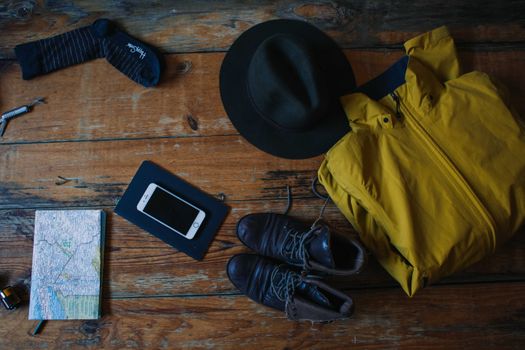
Most packing lists cover the obvious layers. A handful of smaller items get mentioned constantly by people who actually live somewhere through its shoulder season, and rarely by travel guides written for peak-season visitors.
The small items that keep coming up
- A portable phone charger. Shorter daylight hours mean more photos and navigation use happening in lower light, and cold temperatures also drain battery faster than usual — a portable charger covers both.
- Small cash reserves. Some seasonal businesses that stay open in shoulder season run reduced staff and skip card processing fees by going cash-only, especially smaller, family-run places.
- Grippy-soled shoes, not just waterproof ones. Wet cobblestones, damp leaves, and off-season foot traffic on ungritted paths make traction a bigger factor than waterproofing alone.
- A printed or downloaded offline map. Some visitor centers reduce hours or close for the season, and relying on getting directions locally works less reliably than in peak season.
- A reusable water bottle. Fewer open cafes and kiosks in shoulder season means fewer casual places to buy a drink on the go.
Why these get missed
Most generic packing lists are written with peak-season assumptions baked in — full services, long daylight, everything open and staffed normally. Shoulder season quietly removes a few of those assumptions, and the items above are simple fixes for exactly the assumptions that go missing first.
None of these are dramatic additions to a bag — they're small, low-weight items that solve for the specific gaps shoulder season tends to open up.
A one-line test for what else to add
If an item solves a problem caused by "fewer people, less daylight, or reduced services" specifically — rather than just "cooler weather" — it's probably one of these easy-to-forget additions, not a standard layering item.
More local-knowledge items worth adding
- A compact flashlight or headlamp. Shorter daylight combined with reduced street lighting maintenance in some smaller off-season towns means more walking in genuinely dark conditions than a peak-season visitor would expect. A phone flashlight works in a pinch, but drains the battery you're also relying on for navigation and photos.
- Hand warmers, even in mild-seeming destinations. Locals in shoulder-season climates often carry small disposable or reusable hand warmers well before what a visitor would consider "cold" — the practical experience of standing outside for twenty minutes waiting for transit feels different than a quick dash between heated buildings.
- A lightweight tote or packable bag. With fewer tourist shops open and staffed to provide bags, and more locals doing their own errands during shoulder season, having a reusable bag on hand avoids an awkward moment at a smaller, family-run shop.
- A local SIM card or offline data plan, sorted before arrival. Reduced staffing at tourist information points and telecom shops in shoulder season can make sorting out connectivity on arrival slower than it would be in peak season, when more staff and options are available.
Why locals notice these gaps first
People who live somewhere through its full shoulder season experience the small frictions repeatedly and adjust their own habits accordingly — carrying a charger becomes automatic, not a special preparation. Visitors, by contrast, usually arrive having researched a single trip's worth of packing advice, most of which is written (consciously or not) with peak-season assumptions about daylight, service availability, and crowd-driven infrastructure baked in. The gap between local habits and visitor packing lists is really just the gap between lived, repeated experience of a shoulder season and a one-time trip planned from general guidance — which is exactly why asking someone who actually lives through it, even informally through a forum or a quick message to accommodation hosts, tends to surface these small, specific items faster than a generic search.
Asking locals directly, and what to ask
If you have any local contact before a trip — a host, a tour operator, even a hotel's front desk via email — a short, specific question tends to get more useful answers than a broad one. Rather than asking "what should I pack," ask something like "what's one small thing visitors usually forget to bring this time of year" — the specificity of the question tends to surface exactly the kind of small, easy-to-miss item this list is built around, rather than a generic repeat of standard packing advice.
Building your own list over repeat visits
If you return to the same destination across multiple shoulder seasons, it's worth keeping a short running note of exactly which small items turned out to matter and which didn't, specific to that place. This personal, destination-specific list will end up more accurate than any general guide, including this one, because it reflects the actual gaps you personally ran into rather than a broad average across many destinations and travelers. Over two or three visits, this kind of list tends to converge on a small, reliable set of items that consistently earn their space in the bag for that specific place and season.
The overall takeaway
The items covered here are small individually, but together they reflect a broader pattern worth internalizing: shoulder-season travel changes small, everyday assumptions about daylight, service availability, and convenience that peak-season travel doesn't. Packing with those specific changes in mind, rather than a generic list built for peak conditions, is what separates a smooth shoulder-season trip from one full of small, avoidable frictions.
Not overloading the bag with local advice
It's worth applying some judgment to local recommendations too, not every piece of local advice will be equally relevant to your specific itinerary or risk tolerance. Weighing suggestions against your own planned activities, rather than adding every recommended item automatically, keeps the bag focused on what's genuinely likely to matter for your particular trip.
Local knowledge is most valuable as an input to your own planning, not a checklist to follow without any filtering of your own.
Combine general local advice with your own itinerary's specific needs, and the resulting kit ends up better tailored than either source alone could produce.