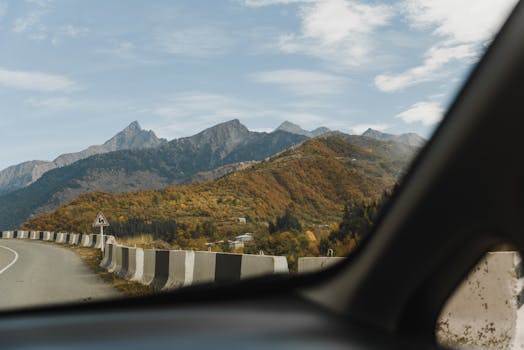
Mountain destinations don't follow the same shoulder-season pattern as beach or city trips — the gap between one activity season ending and the next beginning ("mud season") is its own distinct planning challenge.
The mountain-specific planning layer
Beyond the general shoulder-season considerations covered elsewhere on this site, mountain regions add:
- Lift, cable-car, or gondola closures for seasonal maintenance between activity seasons
- Trail closures or partial access due to lingering snow or spring mud
- Road closures on higher-elevation routes that only fully open once conditions clear
- A genuine access gap — some mountain areas are hardest to fully enjoy in the weeks between seasons, not easiest
A framework for planning around it
- Confirm elevation-specific conditions, not just the regional forecast. Mountain weather and trail conditions can vary enormously by elevation even within a small area — a valley town being clear doesn't mean a higher trail is.
- Check specific lift/gondola/cable-car operating calendars directly, since these are usually published on a fixed schedule unrelated to actual weather that year.
- Build the itinerary around lower-elevation activities as the reliable core, treating higher-elevation or trail-dependent plans as conditional add-ons rather than the anchor of the trip.
- Have a genuine backup plan for a full closed-access day, since mountain mud-season closures are common enough to plan for directly rather than treat as a remote risk.
Where this differs from a beach shoulder-season trip
A beach shoulder season is mostly a weather gradient — quieter, maybe cooler, but usually still accessible. A mountain "mud season" can mean genuinely reduced access, not just less ideal conditions. That distinction is worth planning around directly rather than assuming the two work the same way.
The safest mountain shoulder-season trips are the ones built around what's reliably accessible at lower elevations, with higher-elevation plans treated as a bonus if conditions allow — not the reverse.
Spring vs. autumn mud season: they're not the same
Mountain regions typically have two shoulder windows a year, and they behave differently. Spring shoulder season, right after ski season ends, usually means melting snow, muddy trails, and swollen streams from runoff — conditions that improve steadily as the weeks pass. Autumn shoulder season, before ski season starts, tends to be drier and more stable underfoot, with the main constraint being shortening daylight and the first snowfall arriving unpredictably at higher elevations. If you have flexibility on which shoulder window to target, autumn generally offers steadier, more predictable conditions than spring, even though both get lumped under the same "mud season" label.
Reading a mountain town's actual elevation profile
Two mountain destinations at a similar latitude can have very different shoulder-season experiences depending on their elevation range. A town at a lower base elevation with activities concentrated nearby will clear up and become fully accessible well before a destination where most of the appeal sits at higher elevation and requires lift or trail access to reach. Before booking, check not just the town's elevation but the elevation of the specific activities you actually want to do — a "mountain town" itinerary built around a valley floor market and lower lakeside trails clears months earlier than one built around a high alpine pass.
Packing differently for mountain shoulder season
Temperature swings in mountain shoulder season are often more extreme than travelers expect, both across a single day and across elevation. A valley town might sit at a comfortable daytime temperature while a trailhead a thousand meters higher is still near freezing, especially in early morning. Layering becomes less optional and more load-bearing here than in a beach or city shoulder-season trip — waterproof outer layers matter more too, since mud-season precipitation is common and trail conditions turn unpleasant fast once gear gets wet.
Talking to locals before committing to a plan
Because mud-season access can vary meaningfully year to year depending on that season's specific snowpack and melt timing, official seasonal calendars are a starting point rather than a guarantee. Local outfitters, guesthouses, and tourism offices usually know current trail and road conditions well before that information reaches broader trip-planning sites, and a quick message to a local business before finalizing higher-elevation plans is one of the more reliable ways to avoid arriving to a closure that wasn't reflected in the published schedule.
A final structural tip: build the itinerary in reverse
Rather than starting with what you want to do and hoping conditions allow it, it can help to plan a mountain shoulder-season trip in reverse — start by listing what's reliably open regardless of that year's specific mud-season timing, build the core itinerary from that list, and only then layer in higher-elevation or trail-dependent plans as optional additions you'll confirm closer to the trip. This ordering keeps the trip's foundation solid even in a year where mud season runs longer than usual, with the flexible upside still available if conditions cooperate.
What a realistic 5-day mountain shoulder-season itinerary looks like
Applying the reverse-planning principle to a concrete structure: day one centers on a lower-elevation town or valley walk that doesn't depend on lift or trail access, giving a reliable start regardless of that year's specific conditions. Day two checks current higher-elevation access and, if conditions allow, includes a conditional trail or viewpoint outing with a lower-elevation backup already identified. Day three, similar to the general backup-day principle covered elsewhere on this site, is a genuinely flexible day that can absorb whatever the first two days revealed about actual conditions. Day four repeats the conditional structure of day two, ideally targeting a different access point than day two in case one area turned out to be closed. Day five stays deliberately light, built around confirmed, low-risk options near the accommodation rather than anything requiring a longer transfer. This structure keeps the trip's floor solid — every day has a reliable fallback — while still leaving real room for the higher-elevation experiences that likely motivated the mountain destination choice in the first place.
Insurance and cancellation flexibility for mountain trips
Given the genuine access uncertainty built into mountain shoulder-season travel, booking accommodations and activities with flexible cancellation terms is worth prioritizing even at a small premium over the cheapest non-refundable option. A lift pass, guided hike, or mountain hut booking that can be rescheduled or refunded if conditions don't cooperate removes one more source of stress from a trip that already has more built-in uncertainty than a beach or city shoulder-season alternative.