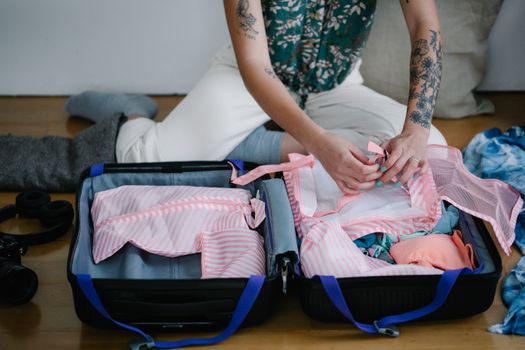
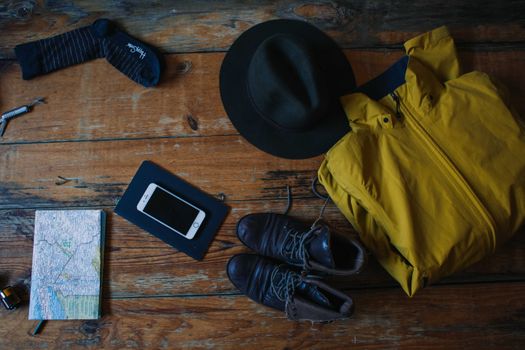
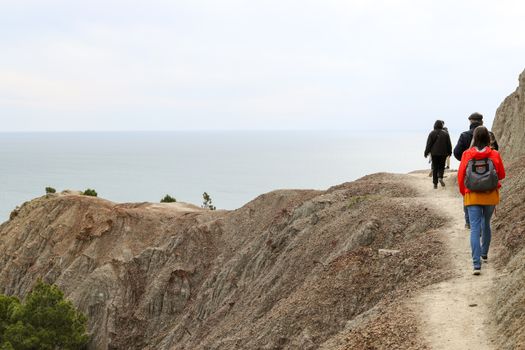
Some shoulder-season trips don't stay in one weather zone — a route that moves from a warmer coastal stretch to a cooler inland or mountain leg can genuinely span two seasons' worth of conditions in one bag.
The three-zone method
Instead of packing item-by-item, split the bag into three functional zones:
| Zone | What goes here | Rule |
|---|---|---|
| Base zone | Items useful across the entire trip | No season-specific bulk |
| Swing zone | Layers that adapt to either leg | Must work in both warmer and cooler conditions |
| Leg-specific zone | The one or two items only needed for a specific leg | Kept to an absolute minimum |
The base zone should be the largest by volume; the leg-specific zone should be the smallest — ideally just one or two items per distinct leg of the trip.
Applying it to a real route
For a trip moving from a milder coastal week into a cooler inland or mountain week: base-zone items are things like base-layer tops and a rain shell that work in both. Swing-zone items are the mid layer and versatile pants that adapt either direction. Leg-specific items might be just one warmer accessory (a hat or heavier scarf) added only for the inland leg, packed at the top of the bag for easy access rather than buried.
Packing order matters here
Pack leg-specific items last, so they're accessible exactly when the trip transitions — digging through a full bag mid-trip to find the one warm layer defeats some of the point of planning this way.
The method isn't about packing less overall — it's about making sure most of what you pack pulls double duty across both legs, so the bag doesn't grow with every additional stop.
When this method isn't worth the effort
For a short trip that stays in one climate zone the whole time, this three-zone split adds complexity without much benefit — it's built specifically for multi-leg or multi-region shoulder-season routes.
Choosing base-zone fabrics that actually pull double duty
The base zone only works if the fabrics genuinely perform across both temperature ranges, not just technically fit in the bag. Merino wool base layers are a common recommendation here for good reason — they regulate temperature better than cotton across a wider range, resist odor over multiple wears without washing, and pack down smaller than an equivalent cotton item. A midweight merino top, in particular, can function as the primary layer on a mild coastal day and as an effective base layer under a shell on a cooler inland day, which is exactly the kind of dual function the base zone is built around. Synthetic quick-dry fabrics are the next best option where merino isn't available or affordable, though they tend to hold odor more over a multi-day trip.
Footwear across two seasons is the hardest part
Clothing layers are relatively easy to make work across two climate zones; footwear is where the method gets genuinely difficult. A single pair of shoes rarely performs equally well on a warm coastal boardwalk and a cool, possibly wet inland trail. The most workable compromise is usually a single pair of light, water-resistant trail or walking shoes that lean slightly toward the cooler-weather end of the trip — they'll run a little warm on the mild days, but that's a smaller problem than being underprepared for wet or cold conditions on the other leg. Packing a second full pair of shoes specifically for one leg is rarely worth the space unless the two legs are dramatically different (for example, beach sandals plus real hiking boots).
A sample base-zone packing list
- 2-3 merino or quick-dry short-sleeve tops
- 1 merino long-sleeve top (doubles as a base layer)
- 1 lightweight rain shell (works as wind protection on mild days, rain/cold protection on cooler ones)
- 1-2 pairs of versatile pants that aren't purely warm-weather shorts or purely cold-weather thermal
- 1 pair of light, water-resistant walking shoes
- Underlayers and socks sized for the cooler leg, since it's easier to feel slightly warm than genuinely cold
Adjusting the method for three or more legs
The three-zone structure still holds for longer, more complex routes, but the leg-specific zone needs a hard cap to avoid it slowly becoming the largest part of the bag. A useful rule: if a route has more than two distinct climate legs, look first at whether the swing zone can be upgraded (a slightly warmer mid-layer, a slightly more weather-resistant shell) rather than adding another leg-specific item for each new stop. Expanding the swing zone's capability is almost always more space-efficient than accumulating separate items per leg.
Laundry access changes the math
How often you'll realistically have laundry access on the route changes how many base-zone items are actually needed. A trip with laundry available every four to five days can run a noticeably lighter base zone than one where laundry access is uncertain or infrequent — in the latter case, it's worth adding one or two extra quick-dry base-zone items specifically so a missed laundry stop doesn't force a leg-specific item to be worn out of rotation. Checking laundry availability at planned stops before finalizing the packing list is a small step that meaningfully affects how tight the three-zone split can realistically be.
Testing the method with a trial pack
Before committing to a final list for a real multi-leg trip, it's worth doing a trial pack at home: lay out the proposed base, swing, and leg-specific zones, then physically try assembling a "warm coastal day" outfit and a "cool inland day" outfit from what's on the table. If either outfit requires digging for an item that isn't easily accessible, or if an item turns out not to genuinely work for both scenarios despite being categorized as base or swing zone, that's the moment to catch it — not mid-trip when the bag is already packed and the next leg is imminent. This trial-run step takes ten minutes and reliably catches the gap between a packing list that looks good on paper and one that actually performs across the trip's real climate transitions.